What is the ERDF?

European structural policy

Every region in Europe has its own characteristics and faces individual challenges for the future. European structural policy addresses these challenges and aims to balance out imbalances between regions.

What is the ERDF?

The European Regional Development Fund (ERDF) is one of the European Structural Funds and is one of the European Commission's instruments within the framework of cohesion policy. It supports regions in promoting innovation, research, and technological development, making companies competitive, protecting the environment, strengthening public transport, and promoting urban development, among other things.

The ERDF in Germany

The amount of funding depends on the economic development level category of the regions in a member state. For the 2021–2027 funding period, the EU is providing a budget of around €15.4 billion in structural funds for Germany.

Europe strengthens Thüringen
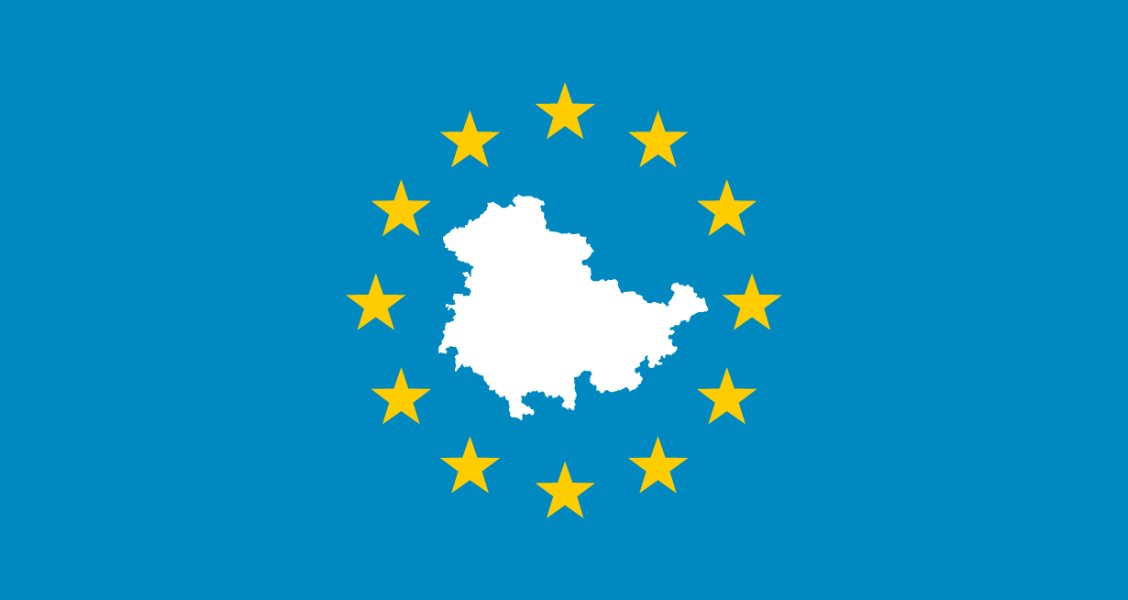
The Free State of Thuringia has €1.55 billion in funding available for the current funding period. Of this, €1.088 billion comes from the ERDF. The ERDF Thuringia 2021–2027 program describes the funding strategies and measures designed to highlight some of Thuringia's most important challenges. The ERDF in Thuringia focuses on the following six major funding areas (known as priorities):

Priority

1 Strengthening research, technological development, and innovation

In order to overcome Thuringia's existing structural weaknesses, it is still necessary to strengthen research, technological development, and innovation, and to expand research and innovation capacities.

To this end, the Thuringian research landscape must be further developed, existing knowledge must be made available to companies on a cooperative basis, and it must be made easier for them to absorb know-how and adapt technological developments. 

In particular, networking between commercial enterprises and with the scientific community offers potential for development that specifically addresses existing structural deficits and helps to overcome them.

Priority

2 Strengthening the growth and competitiveness of SMEs

Support for young knowledge- and technology-intensive companies is essential in order to overcome Thuringia's existing structural weaknesses in terms of growth and competitiveness, stimulate growth, promote the creation of tomorrow's jobs, and effectively support the recovery process following the COVID-19 pandemic. 

At the same time, promoting investment in smart growth for existing companies should serve to boost productivity growth among Thuringian SMEs. On the other hand, resource-efficient and effective economic development should be supported.

Priority

3 Reduction of CO₂ emissions

Around 40% of total CO₂ emissions are generated in the building sector, including public properties and buildings. Therefore, primary energy consumption in these buildings must be reduced to a minimum and the share of renewable energies in energy consumption in public buildings and infrastructure must be substantially increased.

At the same time, public heating networks play a central role in Thuringia's heat supply, and this role is set to grow in the future. Heating networks contribute to a resource-efficient and climate-friendly heat supply. The heat to be distributed should be produced with low CO₂ emissions or contain an appropriate proportion of renewable energies or waste heat. 

Existing heating networks must be prepared and adapted for this purpose. At the same time, new and existing heating networks are to be newly built, converted, expanded, and densified using intelligent storage devices and sector coupling.

Priority

4 Adaptation to climate change, risk prevention, and disaster resilience

In the past, flooding has caused considerable damage in Thuringia. As a result of climate change, a further increase in extreme events is to be expected. 

These consequences must be countered by measures to improve flood protection and hazard prevention, by measures to restore and connect near-natural watercourses, and by measures to renature and connect habitats in the vicinity of watercourses. In addition, structures for municipal flood hazard prevention must be established.

Priority

5 Investments in sustainable, innovative, and future-proof local transport

Without a successful transport revolution, climate targets cannot be achieved. In order to achieve a sustainable reduction in CO₂ emissions, public transport in particular must be strengthened so that private transport can be reduced. 

The modernization of public transport, in particular through the use of innovative and low-carbon drive systems in urban areas and user-friendly urban-suburban networks, is an indispensable part of implementing a sustainable climate policy.

Priority

6 Sustainable and integrated urban development

The spatially balanced and sustainable development of cities and regions is of central importance for cohesion within the European Union. Cities are home and urban environments for those who live their lives there. They are centers of social, cultural, and economic life and thus contribute to people's sense of identity. This applies regardless of their size. 

As centers of social, economic, and cultural life, functioning, attractive cities are also the basis and cornerstone of regional development. Cities must increasingly face new challenges to improve ecological quality of life, conserve resources, and deal with the consequences of climate change.